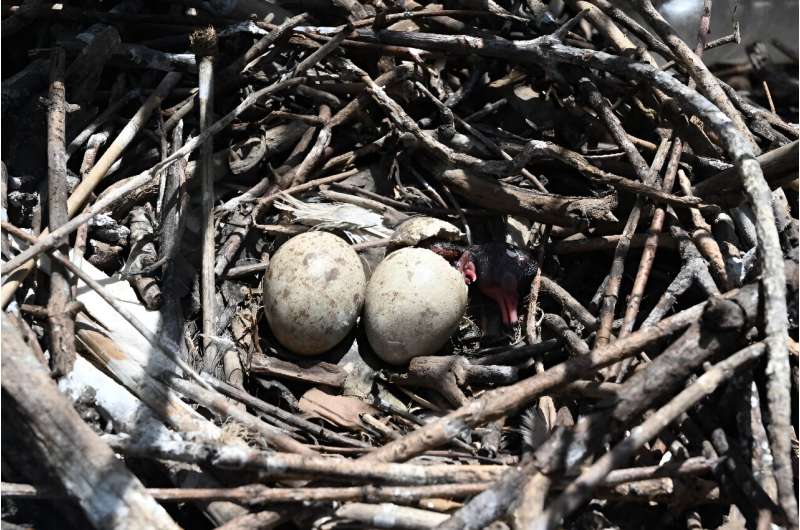
A younger heron struggles to fly after hatching in a nest on a mangrove island coated in plastic waste within the Gulf of Fonseca, situated alongside the Pacific Coast of Central America.
The skies echo with the cries of different seabirds that additionally make their nests on Los Pajaros Island, throughout the San Lorenzo Wildlife Reserve, located amidst the turquoise waters shared by Honduras, El Salvador, and Nicaragua.
Hundreds of herons, gulls, pelicans, frigate birds, roseate spoonbills, and different seabirds make their dwelling throughout the intricate tangle of branches on this 6.2 acre (2.5 hectare) island.
Nevertheless, as of late, they coexist with unwelcome mounds of plastic bottles, entangled fish nets, and different discarded rubbish that washes up on the island’s shores.
Inhabitants of the inland cities typically get rid of their plastic waste into the rivers that movement into the Gulf of Fonseca, thus polluting this once-pristine habitat.
The gulf comprises a dozen or so islands and keys, unfold over an space of 1,200 sq. miles (3,100 sq. kilometers), that are fed by 5 main rivers from the neighboring international locations. Whereas border disputes over the rights to the gulf and its islands as soon as created turmoil among the many international locations, these disputes have now subsided.
The Arrival of Cleanup Time
As an alternative, efforts at the moment are underway to scrub up the islands and keys of the gulf.
An environmental activist group, the Committee for the Protection and Growth of the Flora and Fauna of the Gulf of Fonseca, has joined palms with the Forest Conservation Institute of Honduras (ICF) and coastal municipalities to hold out cleanup operations.
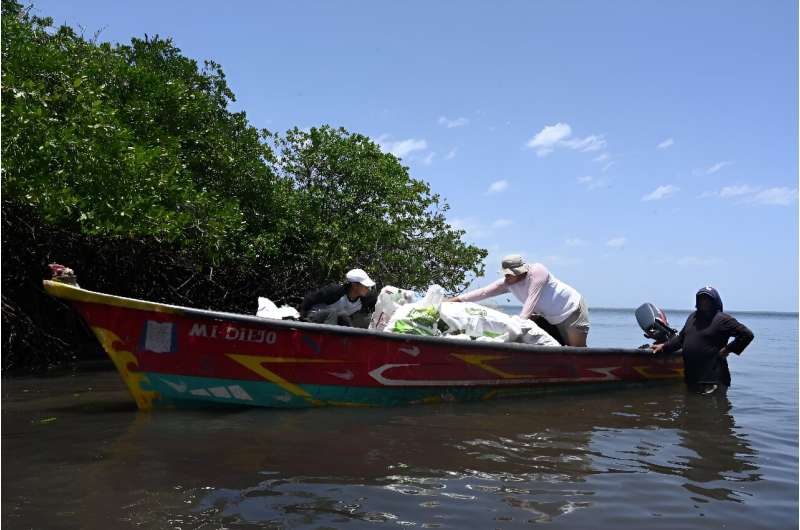
On a current day, a group of round 20 volunteers and authorities employees embark on a mission to Los Pajaros Island, diving into the dense mangrove thickets and filling sacks with countless quantities of plastic waste and discarded bottles.
“These strong wastes… take years to decompose,” states Helen Castillo of ICF, as she speaks to AFP.
The gulf is dwelling to “5 out of seven species of mangrove current worldwide, so it’s a focus of our conservation efforts,” emphasizes environmentalist Carlos Zorto of the activist group.
The Gulf of Fonseca serves as essential nesting grounds for migratory birds and offers habitat for crabs, mollusks, iguanas, and fish, equivalent to snook and snapper.
‘The Most Affected Ones’
A good portion of the rubbish originates from cities and cities in central and southern Honduras, carried downstream to the gulf, explains Castillo.
“We have now witnessed sea turtles with nostrils blocked by plastic forks and spoons, which may end up in their loss of life,” she reveals.
The top of the cleanup effort for the activist group, Adan Rivas, states that they make efforts to contain coastal residents within the cleanup course of.
“We’re those who bear the brunt of environmental degradation,” says Rivas, chatting with AFP. “Within the case of Honduras, we’re witnessing droughts, flooding… and the gradual disappearance of sure species.”
© 2023 AFP
Quotation:
Discarded plastic blights Honduran mangrove island (2023, August 4)
retrieved 4 August 2023
from https://phys.org/information/2023-08-discarded-plastic-blights-honduran-mangrove.html
This doc is topic to copyright. Aside from any honest dealing for the aim of personal examine or analysis, no
half could also be reproduced with out the written permission. The content material is offered for info functions solely.